
Feelwell Article
What Causes Acne and How to Treat It
Acne can be driven by oil production, clogged pores, hormones, inflammation, stress, products, and medications. Here is what can cause breakouts and what treatments actually help.

Jonah Elias
Feelwell writer - Published April 20, 2026
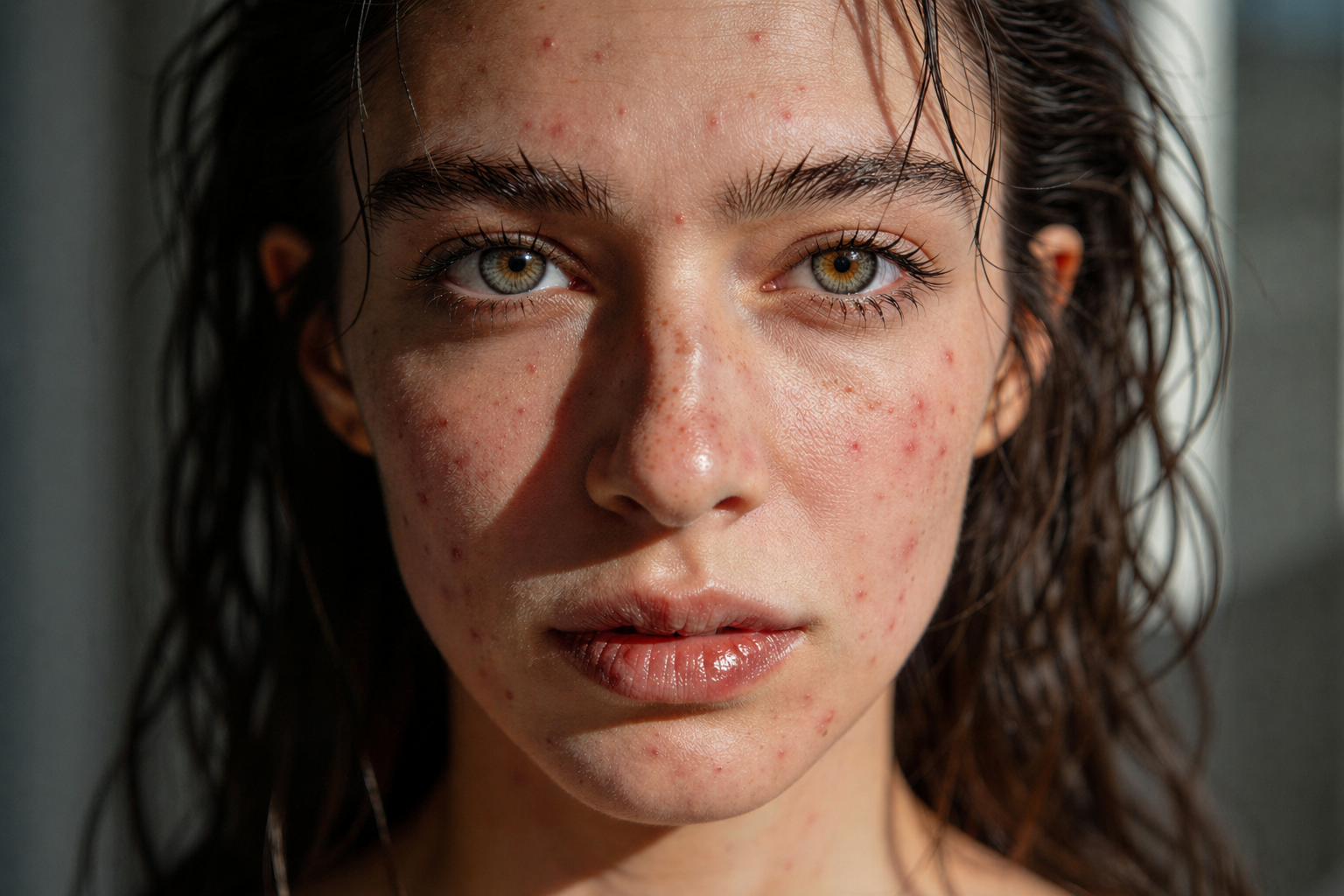
Acne is one of the most common skin conditions, but that does not make it simple. Breakouts can be driven by excess oil, clogged pores, bacteria, and inflammation, but the reasons they keep showing up can look different from person to person. Hormones, stress, products, medications, and day-to-day habits can all shape how acne behaves.
The good news is that acne is treatable, and in many cases it can be reduced a lot with the right routine and enough consistency. The goal is usually not to “attack” the skin harder. It is to understand what may be driving the breakouts, calm the cycle down, and build habits that make future flare-ups less likely.
What Actually Causes Acne?
Most acne starts with a few core problems happening together: the skin produces too much oil, dead skin cells and oil clog the pore, inflammation builds, and bacteria can thrive inside that environment. Once that cycle starts, you get whiteheads, blackheads, inflamed pimples, or deeper breakouts.
That is why acne is rarely caused by one single thing. The visible breakout is often the end result of a few factors stacking on top of each other.
Hormones Can Push Acne Harder
Hormones can increase oil production, which is one reason acne often flares during puberty, around periods, during pregnancy, or during other hormonal shifts. This is also why breakouts around the chin, jawline, and lower face often get described as hormonal.
If acne tends to flare in a monthly pattern, or comes with irregular periods, excess hair growth, or other hormonal changes, it may be worth checking in with a doctor. Sometimes the skin is reacting to something broader happening in the body.
Stress Can Keep The Cycle Going
Stress does not create acne out of nowhere, but it can make existing breakouts more likely to flare and harder to calm down. High stress can affect hormones, sleep, recovery, and daily habits, which then feeds back into the skin.
If your breakouts worsen during more intense stretches of life, that is not just bad timing. The skin often reflects what the rest of the body is dealing with.
Products Can Help Or Make Things Worse
Sometimes acne is made worse by the routine itself. Heavy creams, pore-clogging makeup, greasy hair products, over-exfoliation, and too many active ingredients at once can all leave the skin more irritated and more prone to breakouts.
A better baseline is usually a gentle cleanser, a moisturiser that does not clog pores, and sunscreen that feels light enough to use daily. If your routine leaves your skin burning, tight, flaky, or constantly angry, it may be too aggressive to be sustainable.
Some Medications And Health Issues Matter Too
Acne is not always just about skin care. Some medications can trigger or worsen breakouts, and in some people acne can be part of a larger hormonal picture. That does not mean every breakout is a sign of something serious, but it does mean persistent acne is worth taking seriously when the pattern changes or becomes harder to control.
What Treatments Actually Help?
Treatment depends on the type and severity of acne, but a few ingredients show up again and again for a reason. Benzoyl peroxide can help reduce acne-causing bacteria and inflammation. Salicylic acid can help keep pores clearer. Retinoids can help normalize skin cell turnover and are often one of the most useful longer-term acne treatments.
The main catch is consistency. Acne treatments usually need time. It is common for treatment to take weeks, and sometimes longer, before you see the full effect. A simple routine you can stick with usually works better than a complicated one you abandon after ten days.
Can You Prevent Acne For Good?
That depends on what is driving it. Some people can get to a point where acne is mostly prevented with the right maintenance routine. Others, especially people with stronger hormonal or genetic tendencies, may always be somewhat breakout-prone and need an ongoing management plan rather than a permanent cure.
What usually helps prevent acne long term is not one miracle product. It is keeping the skin barrier calm, avoiding pore-clogging products, treating breakouts early instead of waiting for them to spiral, managing stress where possible, washing gently after sweating, and sticking to a routine long enough to see whether it actually works.
If your acne improves and then always comes back the moment you stop treatment, that does not mean you failed. It usually means your skin benefits from maintenance, just like people who are prone to dandruff, eczema, or rosacea often need ongoing care too.
If Your Acne Seems Hormonal, It May Need A Different Approach
For some women, hormonal treatment may be part of the answer. In those cases, the problem is not just sitting on the surface of the skin. It is being pushed from upstream. That is why some people do not improve much with harsher cleansers or more drying spot treatments but do improve once the hormonal piece is addressed properly.
If your breakouts are persistent, deep, painful, cyclical, or focused around the lower face, it may be worth discussing that possibility with a doctor instead of endlessly rotating products on your own.
When To See A Doctor
It is worth getting help if acne is leaving scars, not improving after a few months of consistent treatment, causing distress, or getting worse. It is also a good idea to get checked if breakouts come with signs that suggest a hormonal issue, or if the acne feels deeper and more severe than the occasional surface pimple.
The earlier you get the right treatment, the better the chance of reducing both active breakouts and longer-term marks or scarring.
The Bottom Line
Acne is common, treatable, and often more stubborn than people expect because it is usually being driven by more than one thing at once. Oil, clogged pores, hormones, stress, inflammation, and products can all be part of the picture. The best long-term strategy is usually a gentler, more strategic routine, realistic expectations, and a lower threshold for getting help when the pattern is persistent.