New 2026 evidence suggests cryotherapy can modestly reduce muscle soreness, but the effect depends on timing and method. Here is what seems to help most, what does not, and how to use cold without sabotaging your training.

Priya
Writer, Inflammation & Mobility - Published May 2, 2026
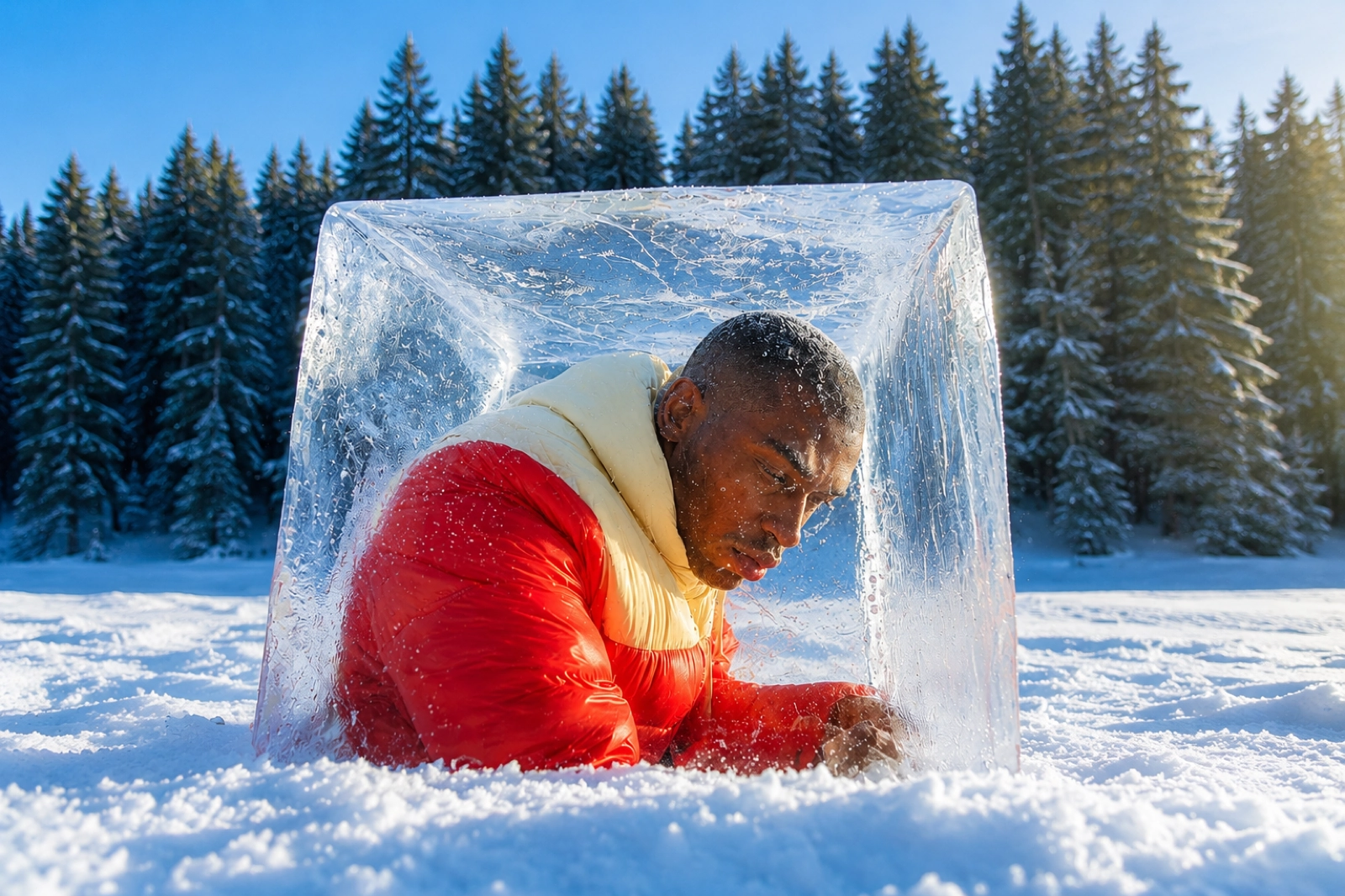
Cryotherapy has become a catch-all term for “cold recovery,” from ice baths and cold plunges to local ice packs and whole-body cryotherapy chambers. The promise is simple: less soreness, faster recovery, and better training consistency.
New 2026 research adds clarity — and a little humility. The headline is not “cold fixes soreness.” It is that benefits are modest, time-dependent, and protocol-specific. Some cold methods can reduce soreness later (think 24 to 48 hours), but they do not reliably wipe soreness away right after exercise. And if your main goal is building strength or muscle, using cold immediately after every lifting session may not be the best idea.
Three high-level evidence updates landed in early 2026:
Together, these papers point to a practical conclusion: cold can be a useful tool for soreness management, but it is not a universal recovery hack.
Across the newest network meta-analysis, no cryotherapy method reliably reduced delayed-onset muscle soreness immediately after exercise. The effects showed up later — and even then, the changes were not dramatic.
If you take an ice bath right after training and still feel stiff and sore later that day, that is normal. The “soreness peak” tends to come 24 to 72 hours after unaccustomed or high-eccentric work, and cold does not magically erase that biology.
In the cryotherapy network meta-analysis, cold-water immersion showed measurable soreness reductions at around 1 hour and 24 hours after exercise (compared with control conditions), while local cold appeared to show the strongest effect later (around 48 hours).
The protocol optimization analysis adds an important nuance: “best” cold-water immersion settings likely differ by what you did (resistance training vs endurance vs team sport), and the certainty of many comparisons was low. That means we should treat protocol rankings as directional, not as perfect rules.
Feeling less sore is valuable. But it does not automatically mean you will jump higher, sprint faster, or lift more the next day.
In the 2026 cold-water immersion depth review, cold-water immersion improved soreness and creatine kinase (a muscle damage marker) compared with passive rest, but it did not clearly improve strength measures, and it did not improve countermovement jump on average. Notably, the paper also flagged that explosive power can be temporarily impaired right after cold-water immersion, which matters if you plan to train power again soon after.
If you want a practical “works for most people” approach, these principles match the newest evidence:
Whole-body cryotherapy chambers are popular, but the newer evidence does not support treating them as categorically superior to simpler options. If cold helps you, an ice bath/cold plunge is usually the most realistic, repeatable approach to test.
Because effects are modest and variable, you get more signal when you do the same thing consistently.
If you do it once and decide it “doesn’t work,” you may just be looking at the wrong time window. Conversely, if you do it once and feel amazing, that could be analgesia + expectation, not a permanent recovery advantage.
Separate from the 2026 evidence refresh, earlier research suggests cold-water immersion immediately after strength training can blunt anabolic signalling and may reduce long-term strength gains in some settings. That does not mean “never use cold.” It means match recovery tools to the adaptation you want.
A simple compromise many lifters use: save cold for conditioning days, heavy eccentric soreness phases, or competition periods, rather than using it automatically after every hypertrophy-focused session.
Cryotherapy and cold plunges are not risk-free. People with cardiovascular disease, uncontrolled high blood pressure, fainting risk, Raynaud’s phenomenon, cold urticaria, or other cold intolerance should be cautious and check with a clinician before using extreme cold exposure. Whole-body cryotherapy has documented adverse events (rare, but real) and should be approached with common-sense screening and supervision.
Based on the newest 2026 evidence, cryotherapy can be a useful soreness management tool — especially cold-water immersion — but it does not reliably eliminate soreness immediately, and the “best” protocol depends on the training context. Use cold strategically when soreness is the bottleneck, keep it consistent, and be more cautious with automatic post-lift cold if your main goal is muscle and strength gains.
Keep reading
Related article
 How to Build Muscle: A Complete Guide to Training, Nutrition, Recovery, and SupplementsBuilding muscle comes down to consistent resistance training, enough food, enough protein, and enough recovery. This complete guide explains how to train, eat, and recover in a way that actually adds size and strength.Muscle RecoveryStrength SupportWorkout RecoveryProtein
Related article
 Why Your Heel Hurts After RunningHeel pain after running is often linked to plantar heel pain, but it can also come from the Achilles tendon, a stress fracture, nerve irritation, or heel pad pain. Here is what the pattern may mean and what usually helps first.MobilityWorkout Recovery